
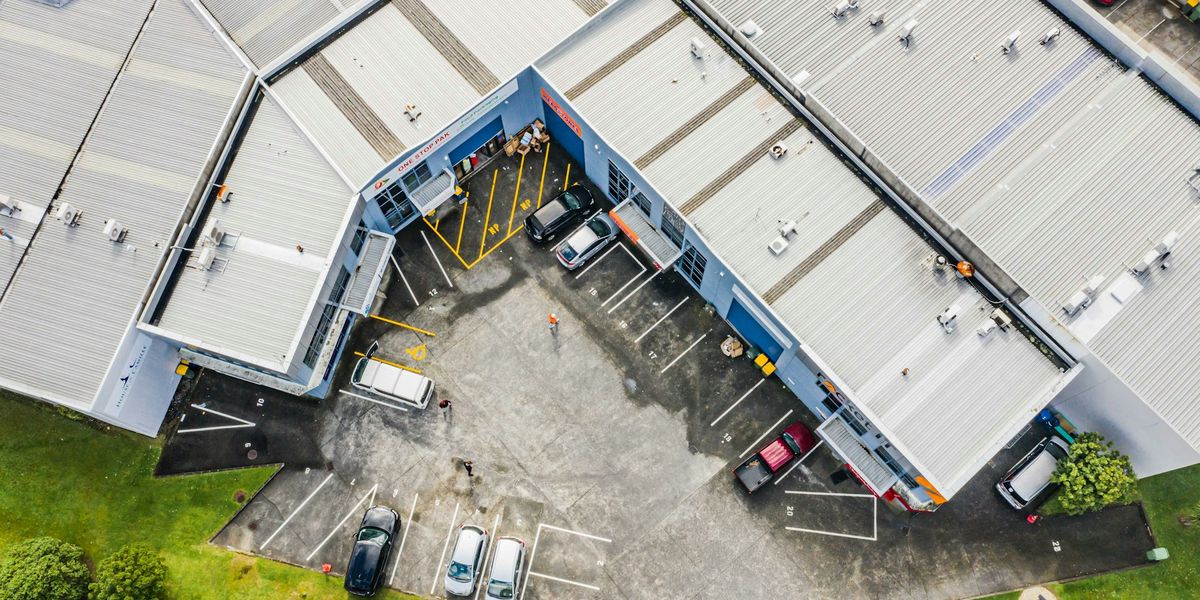
Commercial property is one of the most valuable assets many Kiwi business owners hold, yet it can be surprisingly hard to borrow against. A single vacancy, a lease that's about to expire or a change in bank policy can turn a straightforward refinance into months of back and forth. fundU offers commercial property loans that look at the property and your plan, not just a bank checklist.
We're a direct New Zealand lender. We lend $20,000 to $1m for business purposes, secured by first or second mortgage over commercial and industrial property, and our own credit team makes the decision.
What is a commercial property loan from fundU?
A commercial property loan from fundU is a short to medium term business loan secured by a mortgage over a commercial or industrial property. You can use it to release equity, buy premises, refinance an existing lender or bridge the gap until a sale or bank refinance.
The property can be owned by you, your trading company, a separate property-owning company, a family trust or a supporting party such as a family member. Because it's a business loan, the funds must be used for business purposes, which covers most reasons owners and investors come to us.
Which commercial and industrial properties do we lend against?
We lend against most mainstream commercial and industrial property in New Zealand, from a single retail unit to a multi-tenant building. Here's what we typically look at for each type.
| Property type | What we focus on |
|---|---|
| Offices | Location, tenancy, lease terms and building condition |
| Retail shops and strip retail | Street position, foot traffic and tenant quality |
| Warehouses and industrial units | Access, stud height, yard space and demand in the area |
| Workshops and yards | Zoning, site use and resale appeal |
| Mixed-use (shops with flats above) | Both the commercial and residential components |
| Hospitality buildings, pubs and motels | Location, condition and trading history of the site |
| Showrooms and large format retail | Site profile and alternative uses |
| Some land and lifestyle property | Considered case by case |
We lend right across the country, from Auckland business parks and Hamilton industrial estates to Christchurch retail and Otago workshops. See where we lend for more.
What can you use a commercial property loan for?
The most common uses are:
- Releasing equity in your premises to fund the business, such as paying IRD, buying stock or equipment, or funding growth
- Refinancing a bank loan that is maturing, has been called up or is in arrears
- Buying commercial premises, either for your business or as a business investment
- Bridging finance while you wait for a sale to settle or a bank loan to be approved. Our business bridging finance page covers this
- Leasing up a vacancy, funding refurbishment, tenant incentives or agent costs
- Paying out a business partner who wants to exit a jointly owned property
- Clearing overdue council rates or deferred maintenance that's holding back a sale or refinance
Because loans top out at $1m, purchases we fund are typically smaller premises, or the loan is secured on property you already own to fund a deposit.
Why do commercial property loans get stuck with the banks?
Because commercial lending is where bank policy is at its tightest. Banks tend to review commercial loans regularly, and a change in any one factor can trigger a decline or a request to repay.
Common triggers include a tenant leaving, a lease with only a short time left to run, a building with an earthquake-prone notice or a low seismic rating, a regional slowdown, or simply the bank reducing its exposure to a certain type of property. Smaller commercial owners feel this most. As the Reserve Bank's May 2026 Financial Stability Report points out, small firms lean on non-bank lenders as well as banks, and tend to be offered tougher terms. When a bank steps back, a private commercial lender can give the owner time to fix the issue and then return to the bank on better footing.
Good to know: If your bank has signalled it won't roll over a commercial loan, talk to us well before the expiry date. The more time there is, the easier it is to arrange a valuation, prepare documents and settle without default interest or pressure.
How much can you borrow against commercial property?
It depends on the property's value, what's already owing on it, its type and location, and how the loan will be repaid. The loan-to-value ratio, or LVR, is the loan amount as a share of the property's value, and it's one of the main things our credit team considers.
Commercial property is usually assessed more conservatively than a family home, because values can move with tenancies and the wider economy. A well-leased industrial unit in a strong location will generally support more borrowing than a vacant office in a quieter town. Our guide on how much you can borrow against your property explains the factors in more detail. Loans range from $20,000 to $1m.
First or second mortgage over commercial property?
Both are possible, and the right choice depends on your existing lending.
- First mortgage. Suits unencumbered property, or when your bank wants to exit and we refinance it out. We become the only mortgage lender on the property.
- Second mortgage. Suits owners who want to keep their existing bank loan. We sit behind the bank, which keeps its first mortgage and its terms.
Our guide comparing a first vs second mortgage business loan sets out the pros and cons of each.
Can you get a commercial property loan with bad credit or IRD debt?
Yes, it's considered case by case. With a commercial property loan, the building itself does much of the heavy lifting, so a default on your credit file or an overdue GST balance doesn't automatically rule you out.
What we want to understand is how the problem arose and how the loan will be repaid. A property owner who fell behind on GST during a quiet year but holds a well-located, well-leased building is in a very different position from someone with no clear exit. In many cases, part of the loan is used to clear the IRD debt or arrears directly at settlement, which stops penalties and interest from building and tidies up the owner's position for a future bank refinance. Our IRD tax debt loans page explains that side in more detail.
How does the commercial property loan process work?
It's quicker and simpler than most owners expect, because we make our own decisions.
- Enquire with the property address, what's owing and what you need the funds for.
- Speak with a lending specialist about the property, the purpose and the exit.
- Share property details, such as leases, rent rolls or a recent valuation if you have one.
- Receive indicative terms from our credit team.
- Valuation and documents. A registered valuer usually inspects the property, and the lawyers prepare the mortgage documents. Title is checked through LINZ.
- Settlement. Funds are paid out, including any payout to an existing lender. Once approved, settlement can sometimes happen within 24 hours.
Example scenario
A Napier business owner holds a two-tenancy retail building in a property company, worth about $1.4m, with a $650,000 bank loan due for renewal. One tenant has just left, and the bank has said it won't roll the loan over while the building is half empty. The renewal date is six weeks away.
fundU lends $700,000 by first mortgage, refinancing the bank out and adding $50,000 for a refurbishment of the vacant shop and leasing costs. Interest is capitalised for the term, so the owner isn't paying monthly while the vacancy is filled. The exit plan is to refinance back to a bank once a new lease is signed and the building is fully tenanted again.
What you'll need
For the initial assessment, have these ready:
- The property address and who owns it
- What's currently owing, to which lender, and any maturity or payout date
- Current leases or a summary of tenants, rents and lease expiries
- A recent valuation if you have one
- What the funds are for and how much you need
- Your plan for repaying the loan
- Company or trust details and NZBN where relevant
Ready to unlock your commercial property?
Whether you need to release equity, refinance a loan the bank won't renew, or move fast on premises, a direct lender with its own credit team can often find a way through. We'll give you a straight answer quickly.
Start your commercial property loan enquiry now. It's free, takes a couple of minutes and has no effect on your credit score, and a fundU lending specialist will call you back. You can reach the team on 09 875 4577 too.
Frequently asked questions
What types of commercial property does fundU lend against?
We lend against a wide range of New Zealand commercial and industrial property, including offices, retail shops, warehouses, industrial units, workshops, showrooms, hospitality buildings and mixed-use properties with shops below and flats above. Some land and lifestyle property is considered case by case. We'll look at the location, condition, tenancy and value of each property.
Can fundU refinance a commercial loan my bank has called up?
Yes, this is one of the most common reasons owners contact us. Banks sometimes decline to roll over a maturing commercial loan, often after a vacancy, a lease expiry or a change in their appetite for a property type. We can refinance the bank out by first mortgage, giving you time to sell well or get the property back into bank-friendly shape.
Can I borrow against a commercial property that has a vacancy?
Often, yes. A vacant tenancy is a common reason banks become cautious, but we look at the property's value, location and your plan to lease it or sell it. A loan can also fund the incentives, refurbishment or agent costs needed to secure a new tenant. Each property is assessed case by case.
Can I use equity in my commercial building for my business?
Yes. Many business owners hold their premises in a separate company or family trust. That equity can secure a loan for business purposes, such as paying IRD, buying equipment, funding growth or refinancing expensive debt. We can lend by second mortgage so the existing bank loan on the building stays in place.
Do I need a registered valuation for a commercial property loan?
In most cases a registered valuation is part of the process, because the property is the main security for the loan. Our team will tell you what's needed early. If you already have a recent valuation, let us know, as it can help us give you indicative terms sooner.
How long can a fundU commercial property loan run for?
Our loans are short to medium term. The term is set around your exit plan, such as a sale, a refinance to a bank once a new lease is signed, or the completion of a business event you're waiting on. We'll agree the term and repayment option with you before you commit.
A practical next step
Ready to see what's possible?
Tell us what the business needs, when you need it and what property is available. A fundU lending specialist will call you back to talk it through — enquiring is free and won't affect your credit score.